Explore how faculty and staff are celebrating the Bicentennial spirit in classrooms, performances, special events, and more.
Lafayette College’s 200-year history is a testament to the dedication of our faculty. For two centuries, our faculty’s scholarship and innovation have driven institutional and student success. Here’s a snapshot of that remarkable legacy in practice, as we take a look at Bicentennial academic grants.
Africana studies
Wendy Wilson-Fall, professor of Africana studies and program chair
(Spring 2026)
A panel for this project will bring together two Lafayette College alumni, Jethro Israel ’16 and Robert Young ’14, plus Diane Shaw, the College’s former director of manuscripts at Skillman Library, to talk about their work in collecting information about the McDonogh “brothers” and their benefactor. Their panel will be followed by a later lecture by Prof. Ibrahima Seck, director of research at the Whitney Plantation in Louisiana and an expert on slavery in that state. The grand finale of the program will feature a Zydeco band and barbecue.
“The project aims to contextualize the experience of the students sent by McDonogh to Lafayette College almost 200 years ago,” shares Wilson-Fall.
Confirmed dates coming soon.
Biology
Ezra Lencer, assistant professor of biology
(Spring 2026)
To mark Lafayette’s Bicentennial, the Biology Department will host an alumni speaker series throughout 2025-26, linking the department’s past with its future. Organized with the Biology Inclusion Committee, the series will bring alumni from diverse backgrounds and career paths back to campus to share their experiences, connect with current students, and strengthen the Lafayette community.
“The seminar will help the Biology Department and the College build strong connections with our extended Lafayette College family,” shares Lencer. “Alumni will interact with current students, catch up with faculty members, and have an opportunity to share their knowledge and experience with the College and department that started them on their career trajectory.”
Glenn Rall ’85 will be the program’s first speaker at a seminar titled “Dr. Glenn Rall ’85, Telling the Truth: The Existential Threat to Science and Medicine.”
Chemistry
Chip Nataro, Marshall R. Metzgar Professor of Chemistry and department head
(Spring 2026)
The program will feature keynote speaker Prof. Roger Egolf of Penn State University, author of “The History of Chemical Education at Lafayette College” (Bull. Chem. Hist. 2005, 30, 41). In addition, alumni speakers will share their exciting career paths and how their Lafayette College experiences shaped them. The celebration will also include a poster session featuring current students and alumni, providing an opportunity to connect, exchange ideas, and see firsthand the breadth of Lafayette chemistry in action.
“Chemistry has been woven into the fabric of Lafayette College since its founding, and now the Chemistry Department is proud to celebrate that legacy with an all-day symposium,” shares Nataro. “This special event will take a journey through time—reflecting on our rich history, showcasing the dynamic work happening today, and envisioning the future of chemistry at Lafayette.”
Economics
Susan Averett, Charles A. Dana Professor of Economics, and Julie Smith, Frank Lee and Edna M. Professor of Economics and assistant department head
(Spring 2026)
On April 9, Howard Bodenhorn, a leading economic historian at Clemson University, will give a general interest lecture on an ongoing project titled The Economics of Crime and Punishment in the Prohibition-Era South. The lecture will offer a critical historical lens that aligns with Bicentennial themes of institutional evolution and enduring societal challenges. This presentation will explore how economic incentives influenced the application of justice during a key period of national social experimentation. Bodenhorn will provide the audience with a framework to help us recognize relevant parallels between the economic pressures on the justice system a century ago (as the College’s enrollment grew from 500 to 1,000 students) and the ongoing policy debates regarding mass incarceration and penal labor today.
Film and media studies
Katherine Groo, associate professor and chair of film and media studies
(Spring 2026)
In honor of Lafayette College’s Bicentennial, this weeklong residency will celebrate the College’s longstanding commitment to the “and” of interdisciplinarity, showcase its new electronic music studio, and embrace the future of its new music technology minor. Perera Elsewhere is a Berlin-based electronic musician and producer whose visit will bring together communities from music, art, film and media studies, German studies, the Performance Series, and the Dyer Center for Innovation and Entrepreneurship for conversations around creative practice, contemporary technology, and independent entrepreneurship.
Film and Media Studies, Jewish Studies, Government and Law, and International Affairs
Ilan Peleg, Charles A. Dana Professor of Government and Law
(Spring 2026)
As Lafayette marks 200 years of global perspective and education, Strings of Hope honors international stories shaped by conflict and carried forward through art. It is a Bicentennial event that connects our history to the work of building a more humane future.
Violins that survived the Holocaust and the atomic bombing of Hiroshima come together in performance for the first time. Through film, spoken word, and live music, Strings of Hope brings forward the stories connected to these instruments and the musicians who once played them, tracing journeys that span Hiroshima, Vienna, Warsaw, and Shanghai.
Created by cellist and producer Udi Bar-David, this multimedia program features violin virtuosos Niv Ashkenazy and Mio Imai with an international ensemble. The result is a rare, deeply human event that honors what was endured and carries forward resilience, courage, and hope.
The Bicentennial is about gathering people around meaningful ideas, and Strings of Hope does exactly that. It activates the Williams Center for the Arts as a place where campus and community come together for experiences that matter.
This performance is sponsored by Film and Media Studies, Jewish Federation of the Lehigh Valley, Lehigh Valley JAJAJA , Bethlehem Tondabayashi Sister City Commission, The Judith and Stanley Walker Family Foundation, Lafayette’s Jewish Studies Program, Department of Government and Law, and International Affairs Program.
Hanson Center for Inclusive STEM Education
Wendy Hill, director of Hanson Center for Inclusive STEM Education
(Spring 2026)
Snapshot of the poster series:
As part of Lafayette College’s Bicentennial celebration, the spring 2026 INDS 253: Being Human in STEM course will launch a compelling poster series showcasing the journeys of distinguished STEM alumni that will inspire the campus community and reinforce our dedication to building a more diverse and equitable STEM future.
The poster series will debut at an afternoon reception in early April 2026, to which the campus community will be invited. At this event, the posters will be displayed in the Rockwell Integrated Sciences Center with students on hand to share insights and discuss their subjects’ journeys. The posters will not only honor the remarkable achievements of our alumni but also serve as powerful catalysts for conversation, empowerment, and connection among current students, alumni, faculty, and staff. After the reception, the posters will be prominently displayed in the Rockwell Integrated Sciences Center near the Hanson Center for Inclusive STEM Education, showcasing inclusive excellence in STEM at Lafayette and inspiring others.
International affairs
Dennis Johannßen, assistant professor of languages and literary studies
(Spring 2026)
Prof. Friederike Baer is a historian who specializes in the American Revolution. She recently advised and was featured in Ken Burns’ documentary The American Revolution, for which Skillman Library has provided materials about the Marquis de Lafayette. Baer wrote the much admired book Hessians: German Soldiers in the American Revolutionary War (2022) and the book The Trial of Frederick Eberle: Language, Patriotism and Citizenship in Philadelphia’s German Community, 1790 to 1830 (2008). Her talk will be held 4:15-6:30 p.m. April 15 and will focus on German soldiers and their experiences during and after the Revolutionary War, contextualizing it with questions of language, transatlantic relations, and social transformation in the larger Pennsylvania regions around the time of our College’s founding.
Languages and literary studies
Maria Hernandez, visiting assistant professor of languages and literary studies
(Spring 2026)
The Francophone Film Festival, titled “À voix haute (Out Loud): Voices, Power, and Resistance,” will take place in spring 2026. It will feature French and Francophone films that explore the power of voice and the tension between truth and authority. The festival will create a vibrant cross-disciplinary celebration of language, power, and expression.
Mathematical sciences
Ethan Berkove, professor of mathematical sciences and department head
(Spring 2026)
This project will put together a history of mathematics at Lafayette College. Mathematical offerings go back to the start of the College. In his book The Biography of a College, David Bishop Skillman describes the first day of classes in 1832. There were just two faculty members at that time. One, Charles Francis McCay, was the professor of mathematics, showing that mathematics has been a central part of the Lafayette experience since its inception.
This focused history of the contributions to Lafayette College of the math department will be directed by mathematical historian Fred Rickey and will involve Lafayette faculty and students. Researchers will pull from a variety of sources, and with the help of College archivists, researchers will search through descriptions of course offerings and the development of departments and majors over time. The archives also contain artifacts related to the Calculus Plays in the early 20th century, where students built elaborate ceremonies celebrating the end of calculus.
Researchers will share the results of the project in a culminating lecture or series of talks.
Office of Advising and Co-Curricular Programs
Tingting Kang, director of the English for Academic Purposes Center
(Spring 2026)
Inspired by the Marquis de Lafayette, whose global vision and dedication to liberty shaped the College’s founding, the symposium underscores the College’s enduring commitment to intercultural collaboration over the past 200 years. At the Global Resource Lounge Symposium, to be held 11 a.m. to 2 p.m. Feb. 19, guests can enjoy international food, connect with our community, and discover the world right here on campus.
“This event showcases the richness of our international community and global engagement through student, faculty, and staff-led presentations, posters, artworks, and a collaborative project to translate Cur Non into many languages. Don’t miss the chance to vote for your favorite project,” shares Kang.
Theater, Hanson Center for Inclusive STEM Education
Mary Jo Lodge, professor of theater and department head, and Wendy Hill, director of Hanson Center for Inclusive STEM Education
(Spring 2026)
To honor Lafayette’s Bicentennial and amplify the enduring relevance of our iconic namesake, this project aims to create, record, and debut a dynamic original song. Inspired by the energy and storytelling of the hit musical Hamilton—while using entirely original, copyright-compliant music and lyrics—this project will result in an original piece marking the College’s yearlong celebration. The lyrics for the piece will be written by recent graduate Téo Rodriguez ’24, an experienced rap artist whose brilliant original work was honed during his senior project under Prof. Lodge’s supervision. To accompany Rodriguez’s lyrics for the song, the instrumental music will be created by William Shelton ’23, a talented pianist who graduated with a degree in music and was a co-founder of the Lafayette Interdisciplinary Music Society. Together, Rodriguez and Shelton, along with Profs. Lodge and Hill, will ensure that this original work of art will be a meaningful tribute to our milestone event.
“This piece will weave together two essential narratives: celebrating the Marquis de Lafayette’s enduring legacy as a lifelong champion of liberty, justice, and human rights, and providing a dynamic overview of the most pivotal milestone events in the College’s history,” share Lodge and Hill.
The song will be performed or played as part of several events connected with the Bicentennial.
Williams Center for the Arts (Performance Series)
Ty Furman, director of the Performance Series
(Spring 2026)
In celebration of Lafayette’s Bicentennial, the Performance Series at the Williams Center for the Arts presents the world premiere of the new play The Language of Sight by award-winning playwright Judy Tate, directed by Kim Sykes, about David McDonogh, Lafayette’s first Black graduate (Class of 1844). Produced by Richard Koplin ’64 and Russell Arden Koplin, and developed with support from College Archives, the production will honor McDonogh’s extraordinary journey from enslavement to pioneering physician and will include performances, open rehearsals, and community programs at the Williams Center for the Arts in 2026.
About the play: In 1838 in New Orleans, wealthy landowner John McDonogh sends two enslaved young men, David and Washington, to Lafayette College. A member of the Colonization Society, McDonogh had a plan to have “his Black family” educated then sent back to Africa, where they would become missionaries. Washington left for Liberia in 1842. David had other plans.
Art Galleries, Landis Center, and Lehigh Valley 250
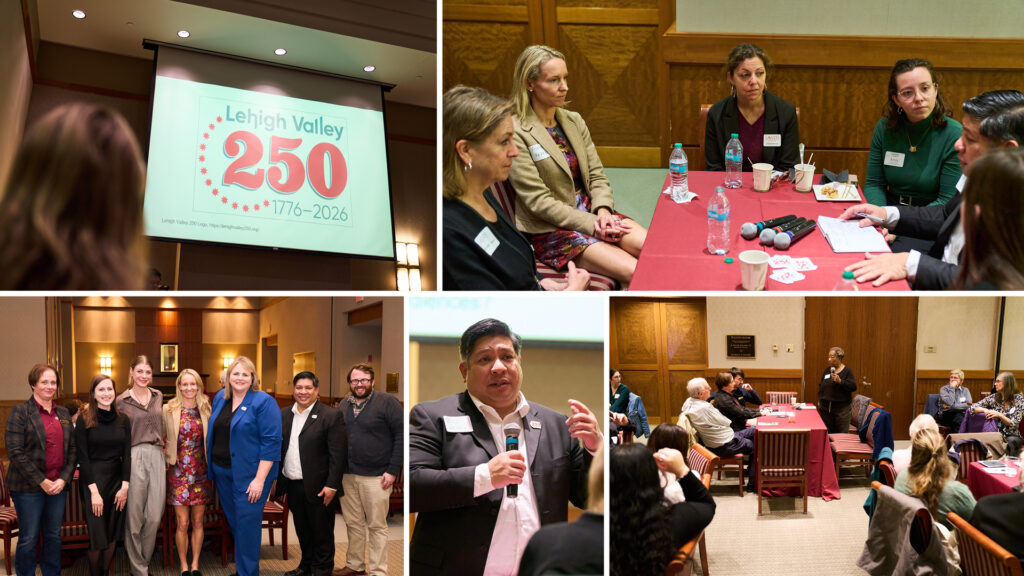
Rico Reyes, director of Lafayette Art Galleries; Chelsea Morrese, executive director of community engagement, director of Landis Center; and Jessica Edris, project administrator, Lehigh Valley 250
The 2025 Keefe Colloquium,”Revolution Revisited: How We Shape and Share History, Then and Now,” was held Thurs., Nov. 6, and featured keynote speaker Ariel Waldman from the American Alliance of Museums. Waldman discussed how, over generations, Americans have shared, questioned, and reimagined our history, and how the nation’s upcoming semiquincentennial and Lafayette College’s Bicentennial challenge us to engage audiences in innovative and inclusive ways. The event coincides with the Bicentennial exhibition Facing Lafayette: Man, Myth, Image on view at the Williams Center Gallery until Dec. 5.
Biology
Ezra Lencer, assistant professor of biology
(Fall 2025 through spring 2026)
The Biology Department is hosting an alumni speaker series throughout 2025-26, linking the department’s historic past with its bright future. Organized with the Biology Inclusion Committee, the series will bring alumni from diverse backgrounds and career paths back to campus to share their experiences, connect with current students, and strengthen the Lafayette community.
“The seminar will help the Biology Department and the College build strong connections with our extended Lafayette College family,” shares Lencer. “Alumni will interact with current students, catch up with faculty members, and have an opportunity to share their knowledge and experience with the College and department that started them on their career trajectory.”
The first event, “Dr. Glenn Rall ’85, Telling the Truth: The Existential Threat to Science and Medicine,” was held in November. Stay tuned for future events from this series.
Film and media studies

Katherine Groo, associate professor and chair of film and media studies
(Fall 2025)
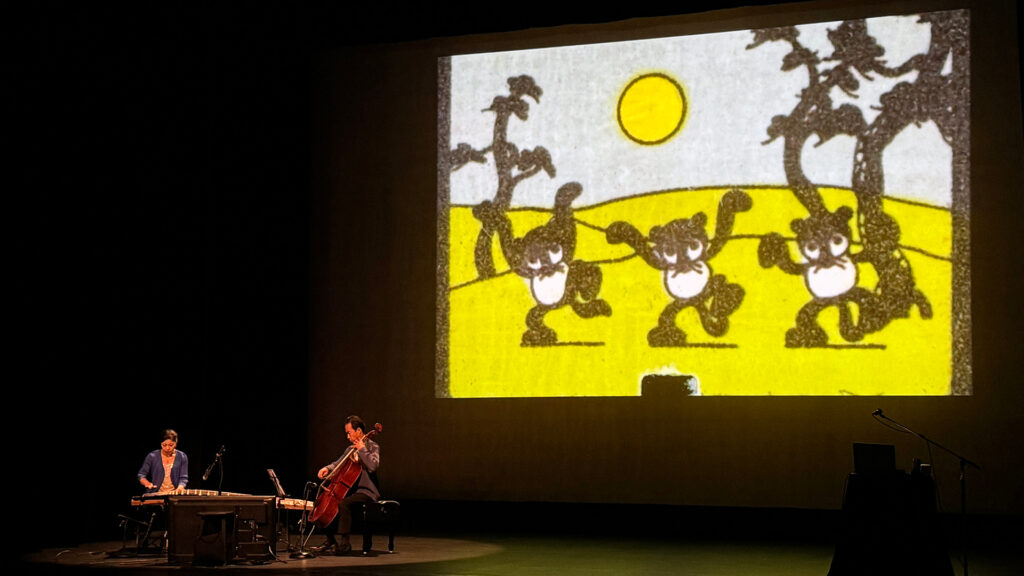
This performance celebrated Lafayette College’s long-standing commitment to the “and” of interdisciplinarity, its extraordinary special collections of Asian visual culture, and the recent transformation of the Williams Center for the Arts’ projection facilities with one of the most important programs of early and silent film in the world. The Japanese Paper Film Project brought together the digital humanities, Asian studies, film and media studies, and music.
Film and media studies

Nandini Sikand, professor of film and media studies
(Fall 2025)
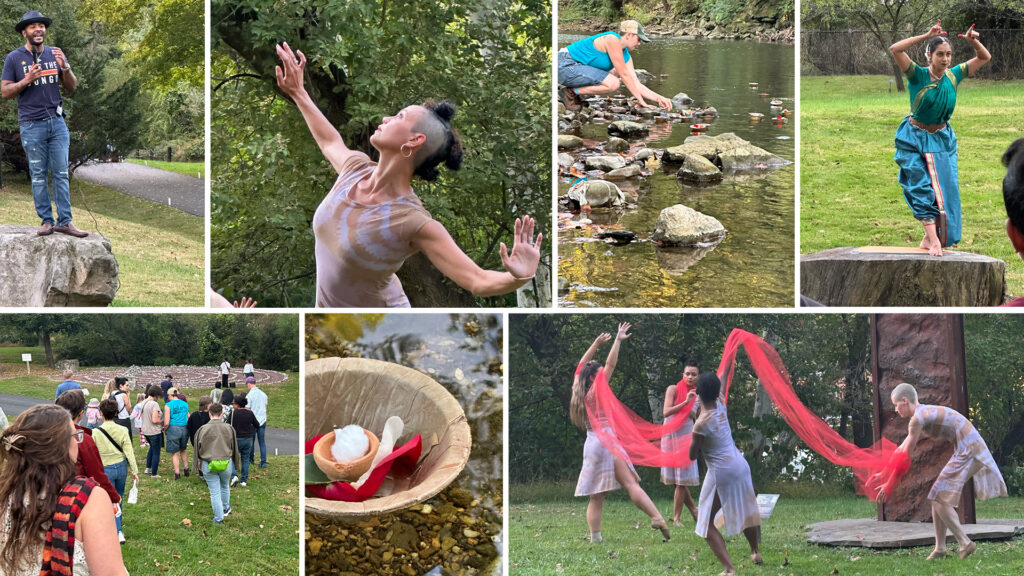
“Run-of-the-River: Liminality and Refusal at the Foot of College Hill: A Bicentennial Reflection,” held in October, was a unique opportunity to highlight and reclaim not only the large, visible moments but also the less visible, the overlooked, the liminal histories that underlie Lafayette and are embedded in every landscape. This one-time performance engaged Lafayette students, faculty, and community members in site-specific dusk performances along the Karl Stirner Arts Trail, exploring the histories of Bushkill Creek and its 200-year connection to the College.
“Through dance, spoken word, music, visual art, and audience participatory elements, the event reflected on the creek’s ecological, industrial, and cultural legacy, using performance to reanimate and reimagine this vital communal space,” shares Sikand.
Film and media studies

Nandini Sikand, professor of film and media studies
(Fall 2025)
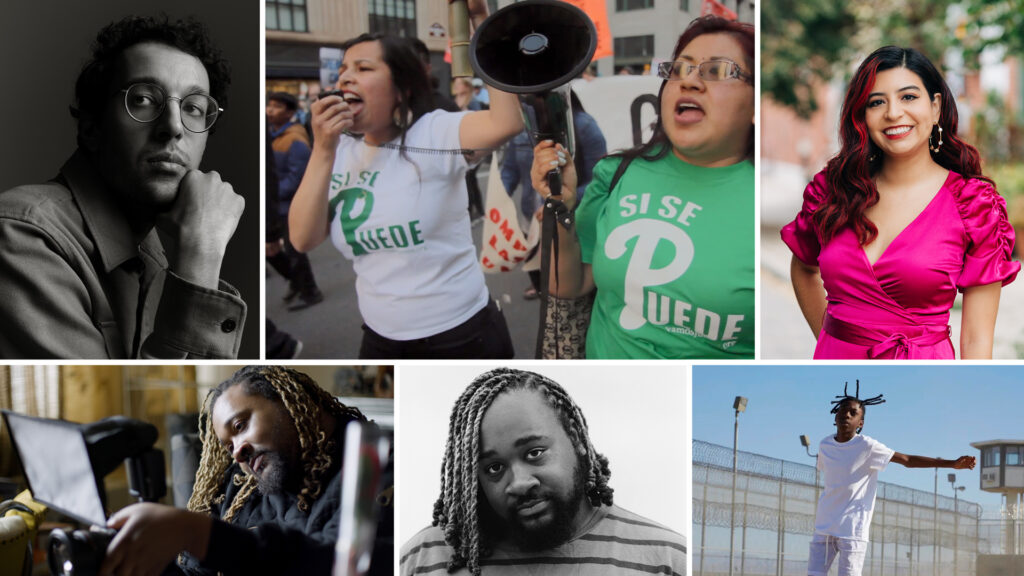
REVOLUTIONS, a Bicentennial interdisciplinary documentary screening series, will feature public screenings, talkbacks, and classroom engagements with contemporary filmmakers and their impactful films. Expansive conversations with artists who excavate themes and forces that have shaped the last two centuries have persisted into the present. These events, alongside the intimate classroom engagements for students, will align with Lafayette’s long-standing commitment to democracy and academic excellence at a critical moment in U.S. history.
Documentary screenings to take place Oct. 28, Nov. 4, and Nov. 11.
Indigenous studies, anthropology & sociology
Andrea Smith, professor of anthropology and sociology, and Katelyn Lucas, visiting instructor and tribal heritage preservation officer of the Delaware Nation
(Fall 2025)
Students in A&S 320: Lenape Homelands and Lafayette: How a College Got Its Land are conducting original research to understand how Lenape homelands became Lafayette College. Students start in special collections assigned to specific College parcels and trace the parcels back to the land’s original inhabitants. Co-taught by the tribal heritage preservation officer of the Delaware Nation, they learn about the Lenape, the colony’s founder, William Penn, land speculation, Penn’s sons’ duplicitous actions dispossessing the Lenape with the Walking Purchase, and early settlers linked to the creation of the town and the founding of the College. Through this original research, students develop a digital archive of their findings, making a public presentation the last week of the semester.
Languages and literary studies, medieval studies, renaissance and early modern studies
Olga Anna Duhl, Oliver Edwin Williams Professor of Languages
(Fall 2025)
The Marquis De Lafayette was celebrated as a hero by both the American and French people. He was received at the palace of Versailles, at George Washington’s Mount Vernon, and at numerous balls throughout the American states. Several dances were even named in his honor. This workshop, led by Dr. Dorothy Olsson and Dr. Peggy Murray, will explore the dances popular during Lafayette’s lifetime, including the minuet, allemande, waltz, and group dances like the contredanse, cotillon, and quadrille, and consider how dance styles changed along with political and social attitudes in Europe and in the nascent United States. Participants will also have the opportunity to learn a few selected dance steps and sequences.
Languages and literary studies

Katherine Stafford, associate professor of languages and literacy studies
(Fall 2025)
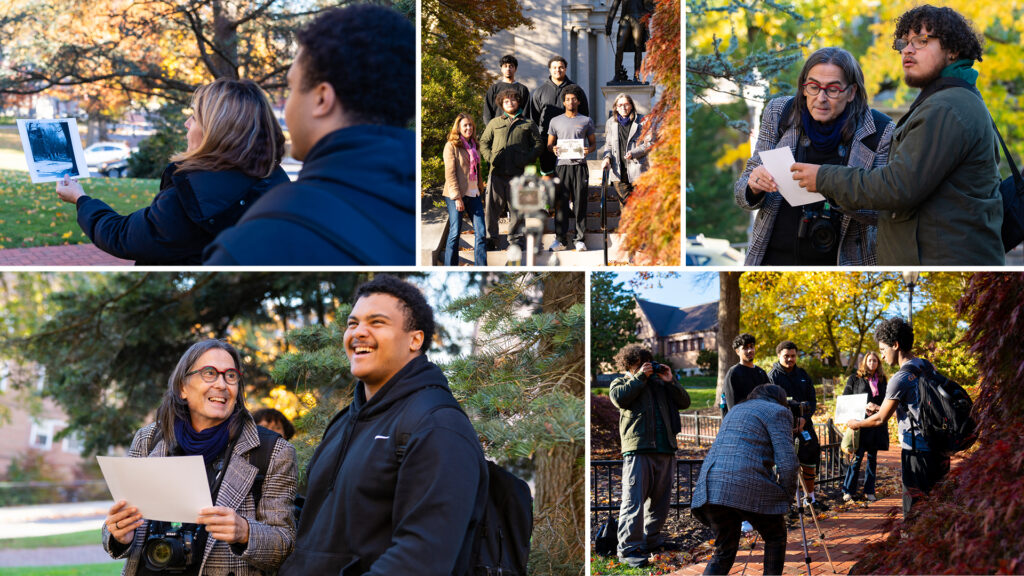
Rephotography is the artistic and historical practice of taking two photographs from the same point of view during two moments in time to create a dialogue between the past and present. Students in FYS 164 will work with visiting artist Ricard Martínez and the College’s Special Collections to create an exhibit in Kirby Library that reflects on the past and present (in dialogue) of Lafayette College and interacts with the space.
“Rephotography reveals the energy that emerges when connecting moments and places, creating visual narratives deeply rooted in the places they represent,” shares Stafford. “The rephotography exhibition is a particularly meaningful event for celebrating the Bicentennial of one of the oldest educational institutions in America.”
Languages and Literary Studies, German Studies, and the Max Kade Center for German Studies

Michelle Geoffrion-Vinci, Thomas Roy and Lura Forrest Jones Professor of Languages and Literary Studies and assistant head
(Fall 2025)
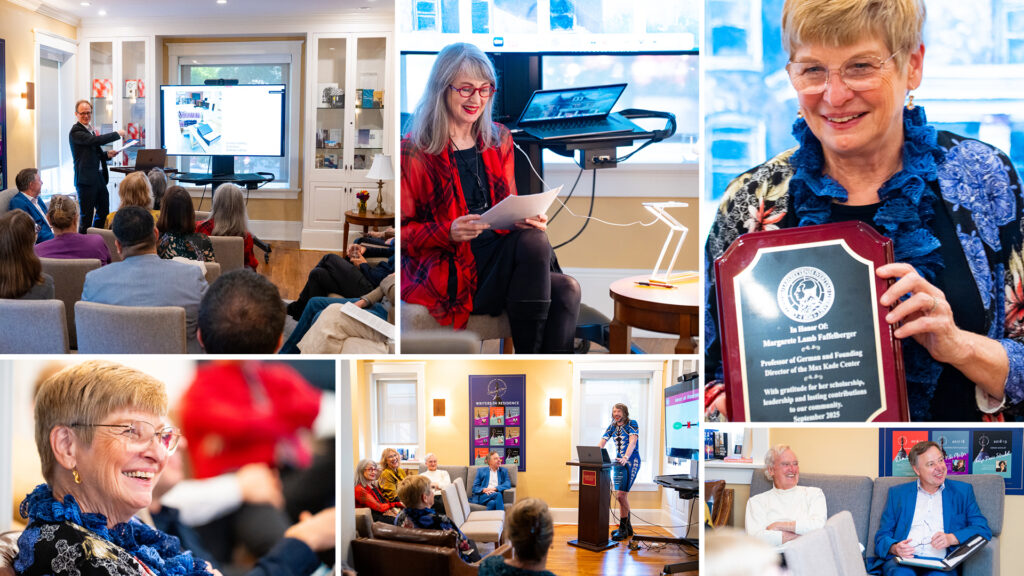
The Department of Languages and Literary Studies organized a symposium in honor of Professor Emerita Margarete Lamb-Faffelberger, whose distinguished career as a scholar, educator, and academic leader has profoundly shaped German Studies and the intellectual life of Lafayette College. This event also highlighted the enduring relevance of German Studies—a field that has been part of the College’s academic identity since its inception 200 years ago, and celebrated two centuries of scholarly tradition and innovation in German Studies at Lafayette College.
“The symposium marked Prof. Lamb-Faffelberger’s retirement and honored her decades of service to the College,” shares Geoffrion-Vinci. “It celebrated her leadership in developing German Studies at Lafayette, particularly through her stewardship of the Max Kade Center, and her contributions to international scholarly exchange, undergraduate research, and institutional partnerships.”
Russian and East European studies
Lindsay Ceballos, associate professor and chair for Russian and East European studies
(Fall 2025)
Dr. Emily Wang (University of Notre Dame) will come to campus for a public lecture 7 p.m. Tues., Nov. 18, in the Gendebien Room of Skillman Library. Wang’s lecture is titled “American Democracy Goes Global: The Untold Story of the 1825 Russian Decembrist Uprising.” Drawing on her recent book, Pushkin, the Decembrists, and Civic Sentimentalism (Wisconsin, 2023), Wang will examine the culture and ideas that inspired the first revolutionary action in Russian history, placing it in the greater context of the French and American revolutions.
“Wang’s lecture is our area-studies homage to Bicentennial themes at Lafayette—the ideas that inspired the Marquis and the Decembrist rebels extend to the local context of the College’s core mission and the global dimensions of political resistance to autocracy in Russia and beyond,” shares Ceballos.
Theater

Mary Jo Lodge, professor and department head of theater
(Fall 2025)
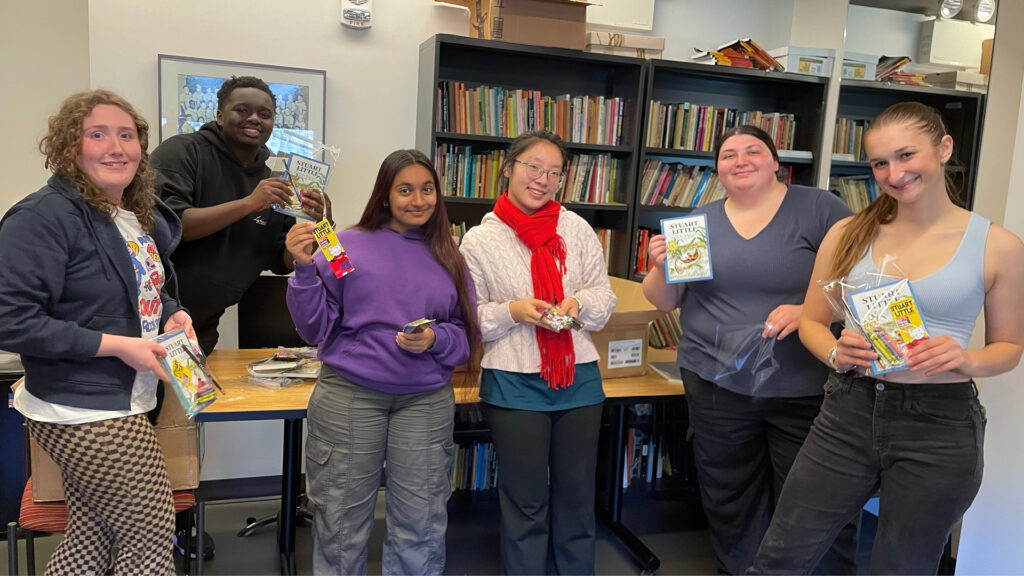
The Theater Department is partnering with the Easton Area School District to bring students to campus to attend a production of Stuart Little, as performed by Lafayette College students. Third grade students will be split into small groups for drama workshops—also led by our students after training from faculty.
“One of the most important legacies of Lafayette, on the occasion of its Bicentennial, is its championing of excellent education in Easton,” shares Lodge. “This project marks one effort to formally support arts-oriented education for the elementary school students in the local school district.”
Theater

Mary Jo Lodge, professor and department head of theater
(Fall 2025)
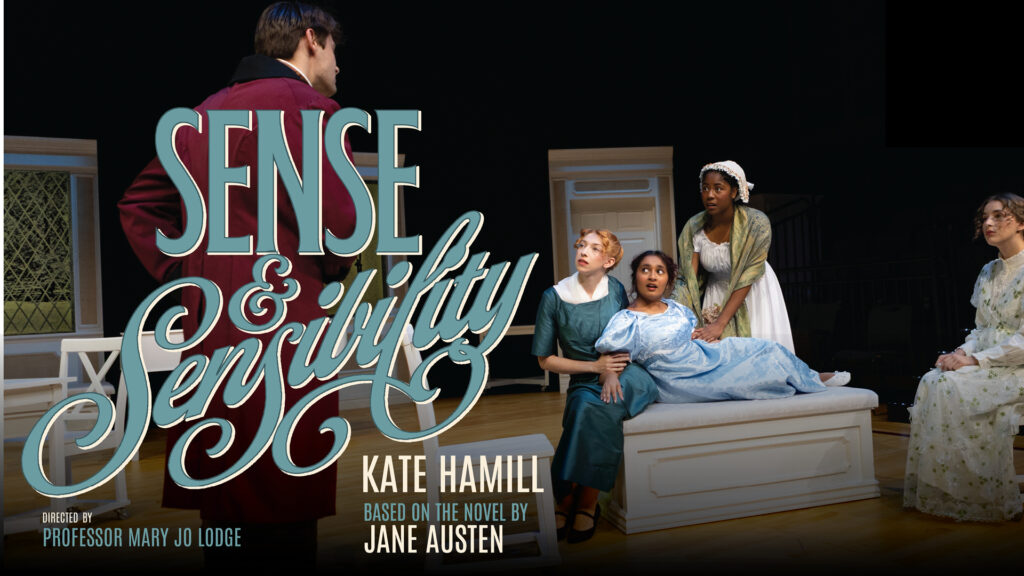
Celebrating both the College’s Bicentennial and Jane Austen’s 250th birthday, the Theater Department presented Kate Hamill’s adaptation of Sense and Sensibility in fall 2025, connecting Lafayette students to a work contemporary with the College’s founding. Programming included a lobby event on period fashions and customs, and a joint birthday celebration for the College and Jane Austen.
Women’s, gender, and sexuality studies

Mary Armstrong, Charles A. Dana Professor of Women’s, Gender, and Sexuality Studies and English
(Fall 2025)
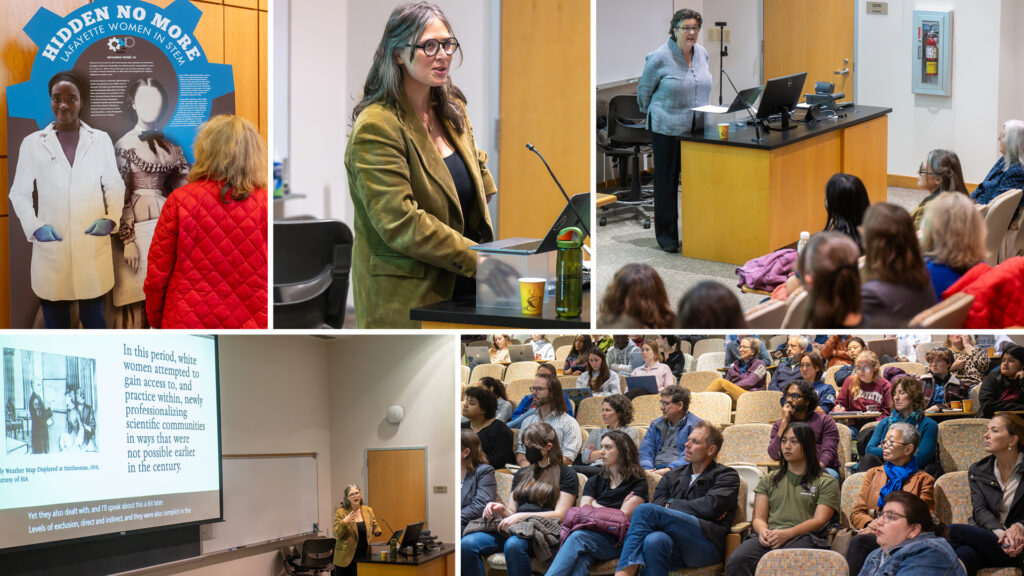
In the 1850’s, Lafayette Prof. James Coffin was mathematical head of the Smithsonian Meteorological Project, the first settler-operated national weather data collection project in the U.S. Sara Grossman, professor at Bryn Mawr, has examined Lafayette’s role in this project, uncovering a Lafayette-centered hidden history of (white) women in science and revealing that Lafayette’s data processing efforts were in fact largely performed by unrecognized women Easton public school teachers.
Grossman’s Nov. 6 lecture, “Weathering Bias: Lafayette College and the Invisible Women of the Smithsonian Meteorological Project,” focused on this hidden Lafayette history and examined how gender shapes the ways the scientific labor of women has (not) been recognized.
“To augment Grossman’s lecture, spark interdisciplinary conversations, and raise awareness of Lafayette’s largely unknown history around gender, data, and STEM, the Women’s, Gender, and Sexuality Studies Program and the Hanson Center have teamed up to create three ‘Hidden No More’ displays that will appear on campus throughout the Bicentennial year,” shares Armstrong. “The ‘Hidden No More’ displays pair a nameless 19th-century woman with an accomplished Lafayette alumna who has excelled in a STEM field. These displays acknowledge our complex past while showcasing the extraordinary Lafayette women who continue to make STEM history.”