What makes us stand out
Global travel, exotic opportunities
Student and Faculty Mentorships
First-year and second-year students are involved in real research with faculty mentors. Here are a few teams and projects.
Computer Science
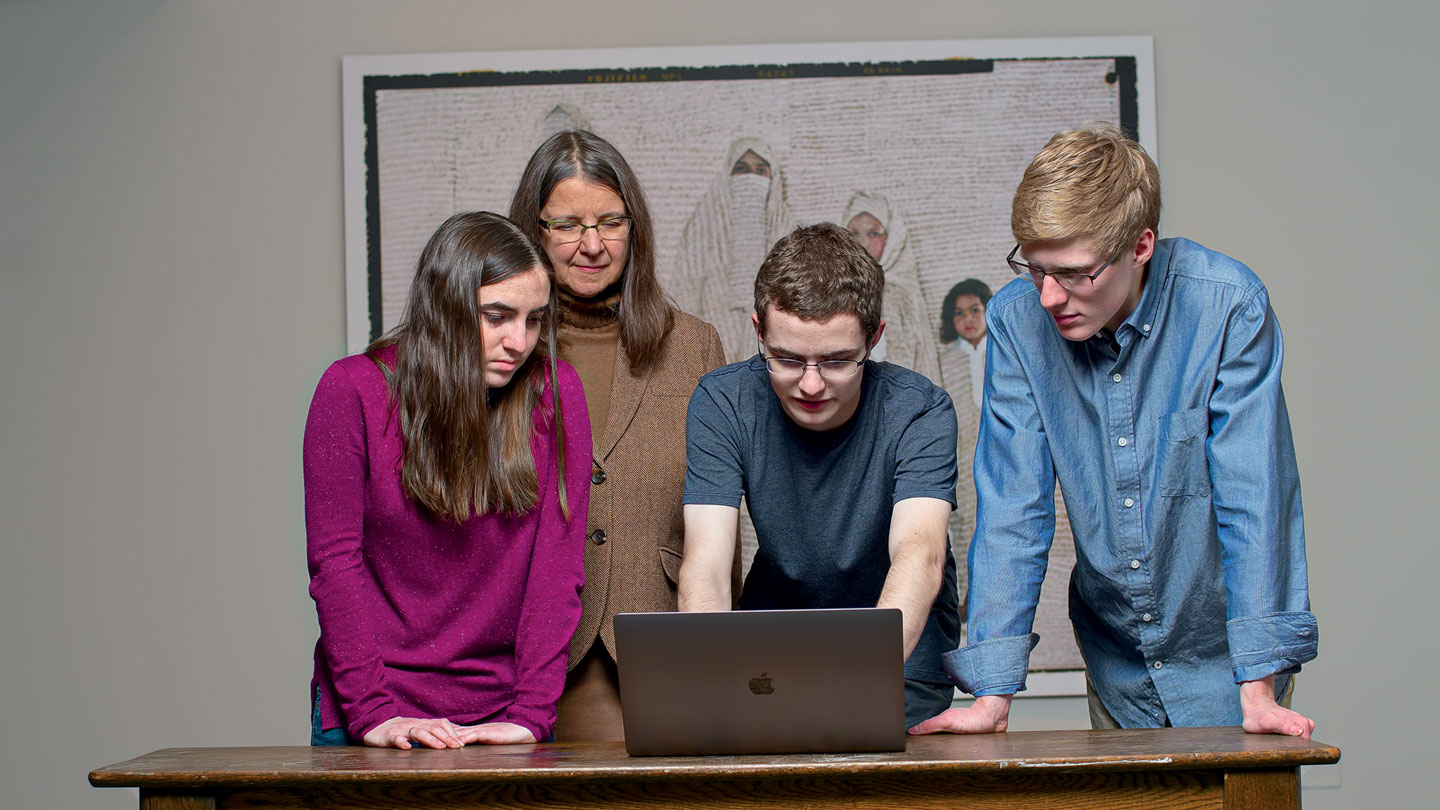
Team
assistant professor, computer science
computer science
computer science
computer science and mathematics
Working on
Recommender systems
What’s that?
When you shop on sites like Amazon, online recommenders list items under headings like “Customers Who Bought This Item Also Bought.” In other words, they make recommendations based on your purchasing behavior or how your behaviors might match others like you.
Challenge
Can recommender systems work in real-time experiences, like moving visitors around a tourist site or helping diners make a dessert selection at a restaurant?
Project
Map out the 100+ artworks on campus and recommend pieces to viewers based on their preferences, proximity, and crowd control.
Development
The team is creating algorithms and maps that will live within a downloadable app.
Team dynamic
The students have classes together and coordinate independent parts of the project, so the team united quickly. “I am exposed to real research, contributing to this project and carrying just enough responsibility as to not get overwhelmed,” says Fuller.
Real-world application
Imagine a museum, like the Met, helping visitors navigate with ease vast collections of art in a manner that has them view works they’d love.
Mechanical Engineering
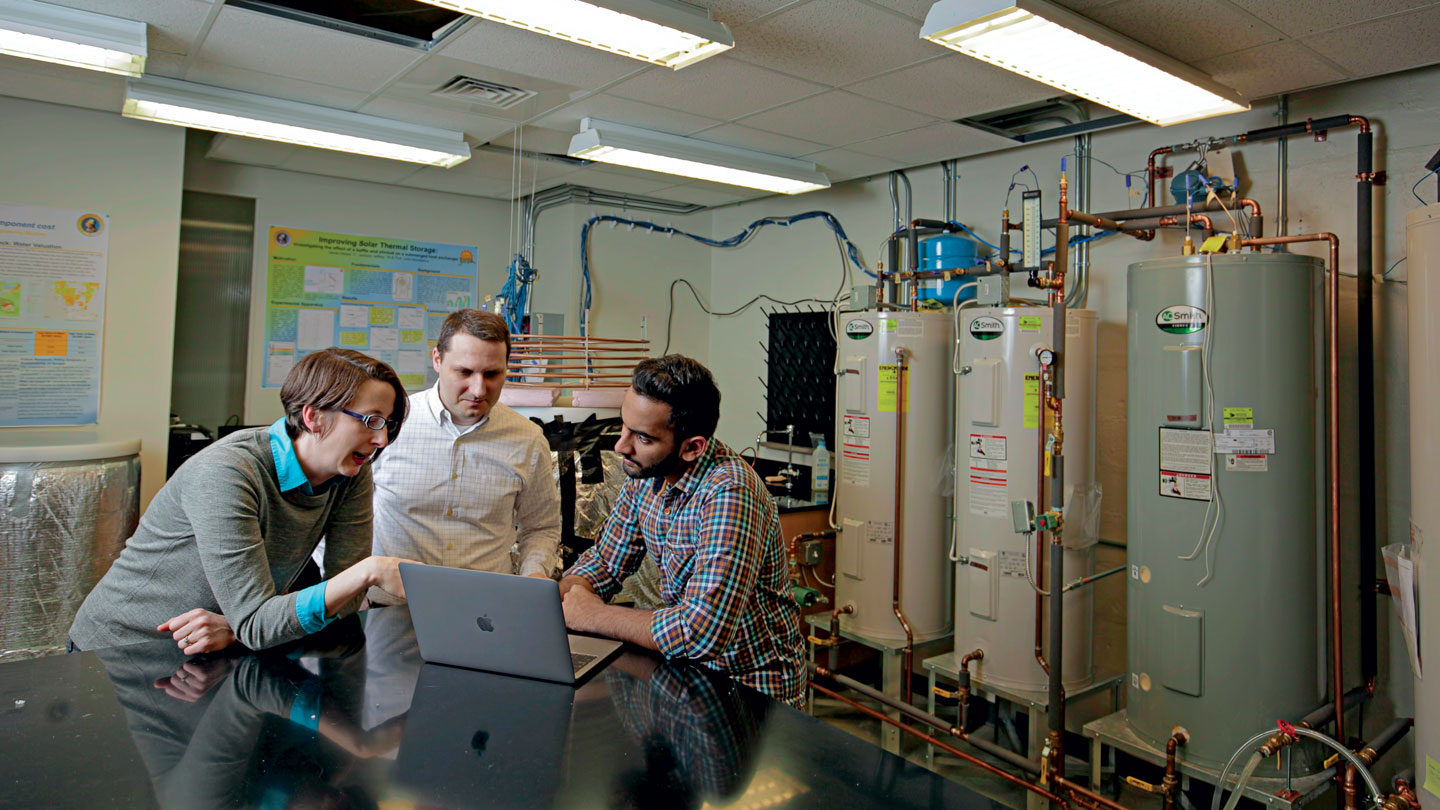
Team
associate professor, mechanical engineering
assistant professor, engineering studies
chemical engineering and mathematics/ economics
mechanical engineering
Working on
Solar thermal heat transfer
What’s that?
Solar thermal systems absorb the sun’s energy via a panel and transfer it via a working fluid, like water, to a storage tank. Energy is removed
from the tank using a heat exchanger for uses such as hot water or home heating.
Challenge
Can we store and extract hot water efficiently and at a low cost so that these renewable systems can compete better with natural gas?
Project
The team is conducting simulations to determine how the shape of internal walls in the tank improve heat transfer.
Development
Nicodemus conducted prior experimental investigations based on other researchers’ models. “We are investigating more accurate numerical models of the system to increase our understanding of the extraction of energy from the storage tank,” says Smith.
Team dynamic
Vijay is excited to be exposed to “valuable college-level research as a first-year student and feeling like an integral part of the decision-making process.” Nicodemus says, “We are part of a global community of researchers, all working on a piece of the larger goal of sustainably meeting our energy needs.”
Real-world application
Climate change is creating a pressing need to move away from fossil fuels. This research is about economically replacing these finite resources with solar heat in people’s homes.
Department of Music
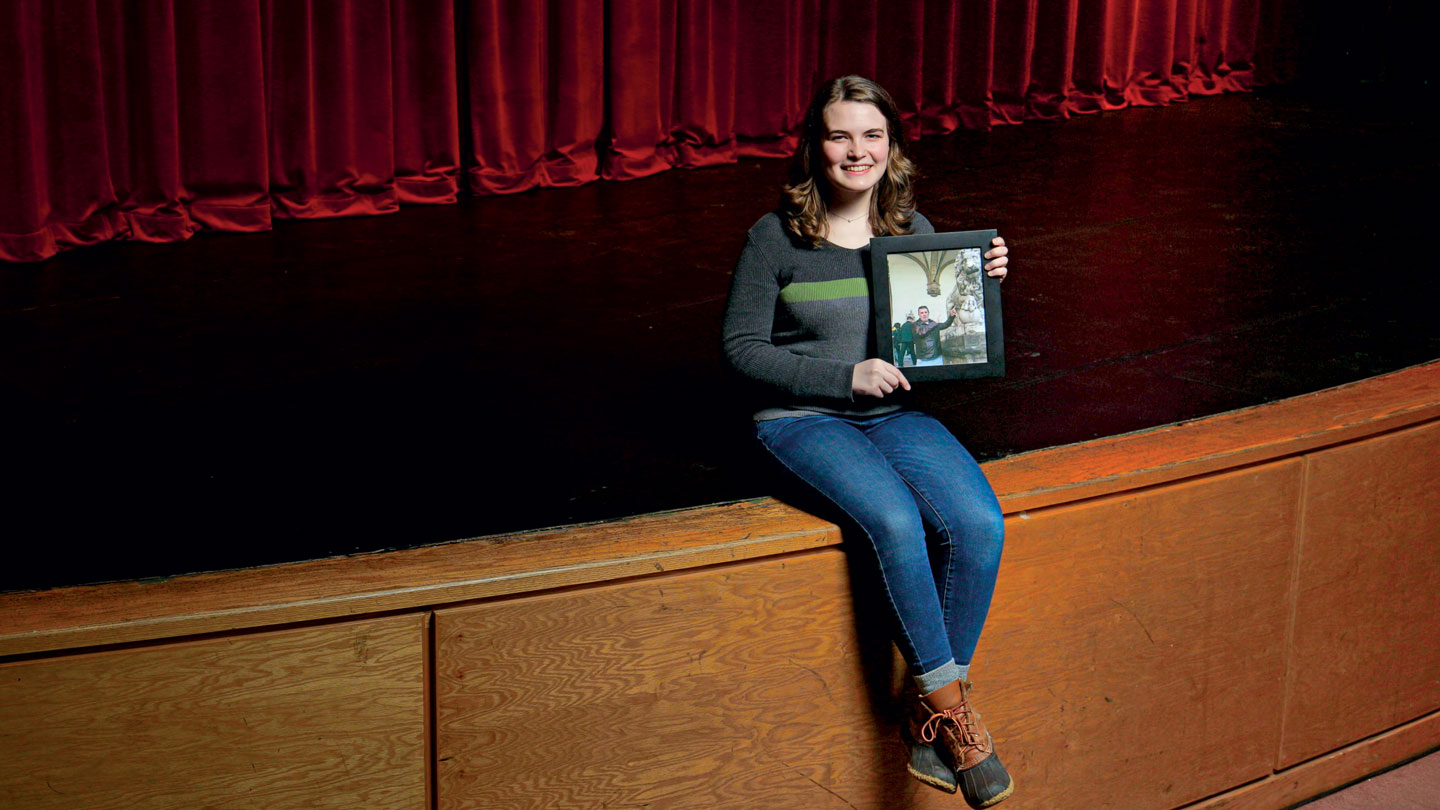
Team
professor, music, and coordinator, Italian studies program
economics and music
Working on
Music of Florence
What’s that?
Florence is considered of first-rank importance in the history of literature, political thought, science, and the visual arts (painting, sculpture, and architecture). But the musical significance of Florence is not as well-understood as it should be.
Challenge
Scholarship over the last 50 years dedicated to the history of Florentine music has been very specialized and devoted to specific topics, but can we capture more generally the Golden Age of Florence?
Project
Develop a book in four major sections, each dedicated to one of the centuries between ca. 1300 and ca. 1700, that synthesizes a macroscopic view of the history of Florentine music.
Development
Cummings is on sabbatical in Italy conducting research while Emick is preparing musical examples for every major concept covered in the book by using Finale, a music-editing program. She prepares these examples sometimes using the original medieval or Renaissance musical notation. She proofreads, drafts, and gathers extensive visual material as well.
Team dynamic
“Emily is a superb student as she works alongside me and helps shape the entire concept into a completed, coherent, and concrete presentation,” says Cummings. “Professor Cummings’ trust in me makes me feel like I am an academic researcher getting to make decisions and be intimately involved,” adds Emick.
Real-world application
Emick says it best: “Nothing like graduating with a nice acknowledgement in a principal text you helped create.”